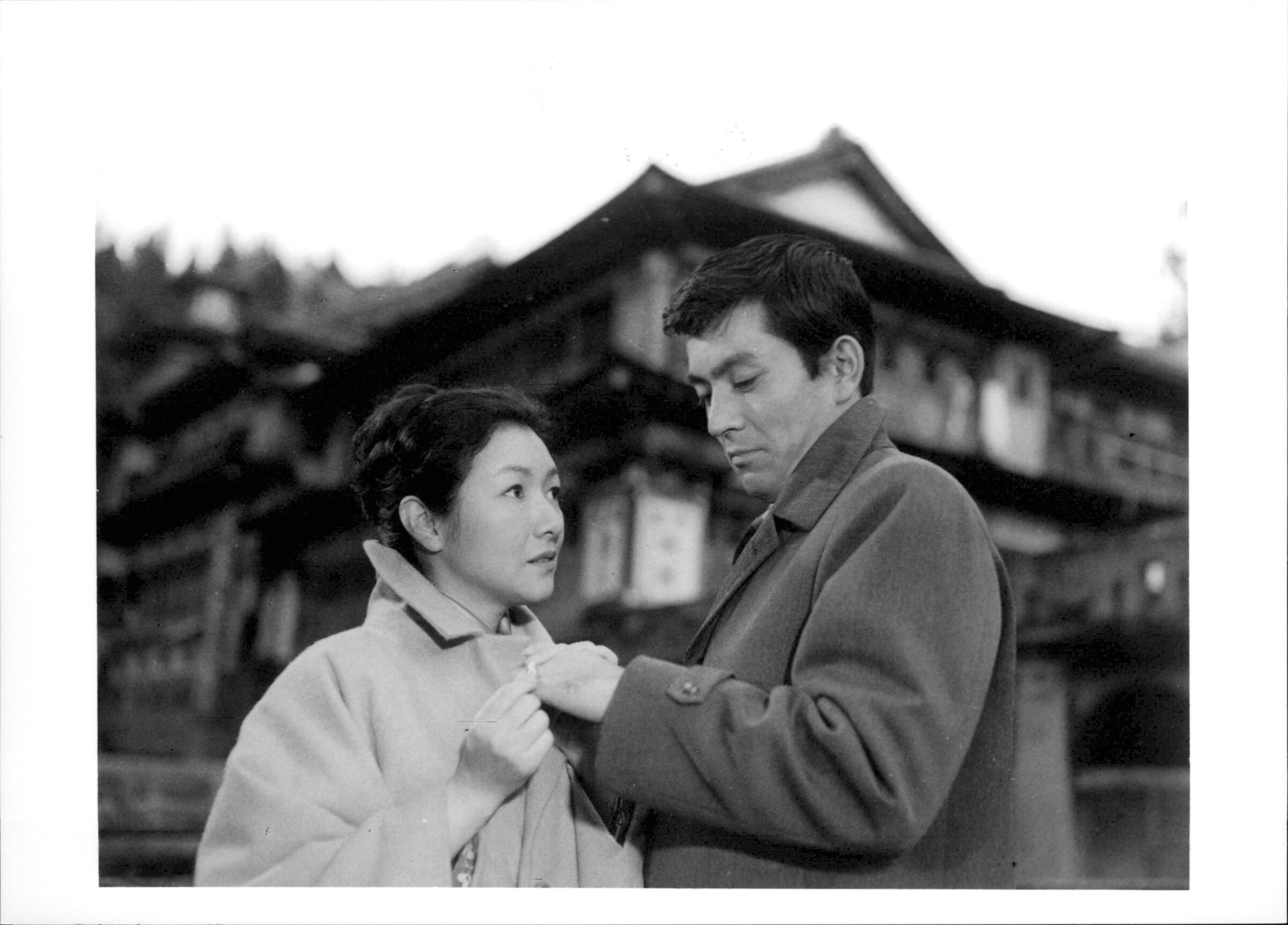
Dir. Naruse Mikio
1964, Japan, 98 min
Japanese with English subtitles
Widowed during the war, Reiko almost single-handedly rebuilt her husband’s family’s liquor store after it was bombed. 18 years later, however, it and the other small businesses are losing business to a new supermarket down the street. As if that was not her only problem, Reiko must both fend off sisters-in-law who want to get rid of her by marrying her off as well as take care of a rambunctious younger brother-in-law, Koji. (The Japan Foundation)
Generously supported by the Japan Foundation, Toronto. 35mm prints are provided by the Film Library of the Japan Foundation’s Tokyo headquarters.

Naruse Mikio (1905–1969) was one of Japan’s most acclaimed filmmakers, celebrated for his understated yet emotionally powerful portraits of everyday life. Beginning his career at Shochiku studios in the silent era, Naruse directed more than 80 films over four decades. Though many of his earliest films have been lost, Naruse’s surviving works reveal a filmmaker of immense sensitivity, able to capture the complexities of ordinary life with striking emotional depth.
Naruse is often mentioned alongside Ozu Yasujiro and Mizoguchi Kenji as one of the giants of Japan’s classical cinema. What makes his films distinctive is their focus on everyday struggles—especially the resilience of women facing hardship, change, and uncertain futures. His postwar works, including Repast (1951), Floating Clouds (1955), and When a Woman Ascends the Stairs (1960), are especially admired for their intimate storytelling and quietly devastating emotional impact.
His understated style—natural performances, simple yet elegant camerawork, and a tone of bittersweet melancholy—captures the drama of ordinary lives in a way that still resonates today. More than fifty years after his passing, his films continue to move audiences worldwide with their honesty, compassion, and timeless insight into the human condition. This program, which brings together six 35 mm prints courtesy of the Japan Foundation, offers a rare opportunity to immerse yourself in this remarkable body of work on the big screen. (The Japan Foundation)
Generously supported by the Japan Foundation, Toronto. 35mm prints are provided by the Film Library of the Japan Foundation’s Tokyo headquarters.